
Northern Lights Tonight: Where & When to See Them
Introduction
There’s something almost magical about standing outside in the dark and watching the sky turn green and pink. If you’ve been Googling “northern lights tonight” and wondering whether you have a real shot at seeing them, you’re in the right place. This guide breaks down everything you need to know — from which states can see the aurora borealis tonight to exactly what time the lights tend to show up.
Whether you’re in Minneapolis or Atlanta, Denver or Dallas, we’ll tell you what your chances look like and how to make the most of the experience.
What Are the Northern Lights (Aurora Borealis)?
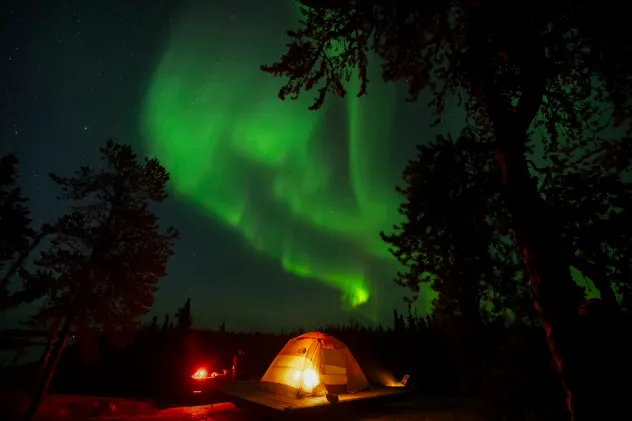
The northern lights are a natural light show in the sky. They happen when tiny charged particles from the sun slam into Earth’s upper atmosphere. When those particles mix with gases like oxygen and nitrogen, they glow — just like a neon sign.
The result? Curtains of green, pink, purple, and red light dancing across the sky. Scientists call it the aurora borealis. Everyone else calls it one of the most beautiful things they’ve ever seen.
Why Are the Northern Lights So Common Right Now?
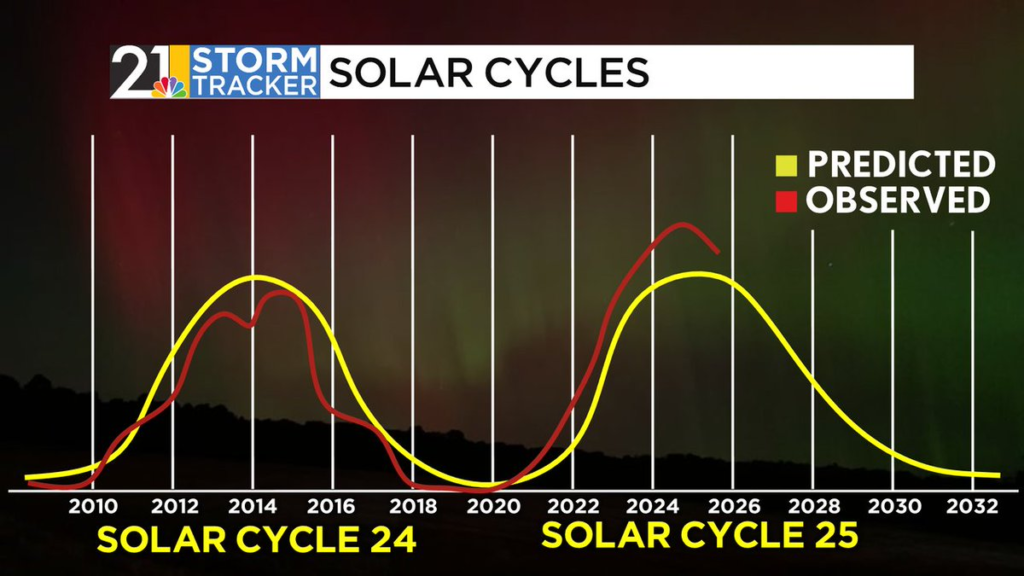
The sun follows an 11-year activity cycle. Right now, in 2026, we’re at or very near solar maximum — the peak of that cycle. That means the sun is sending out more solar flares and coronal mass ejections (CMEs) than usual. More solar activity means more geomagnetic storms hitting Earth, and that means more frequent aurora displays reaching further south than normal.
So yes — if you’ve been seeing more northern lights news lately, that’s exactly why. This is a genuinely rare and exciting window for skywatchers across the US.
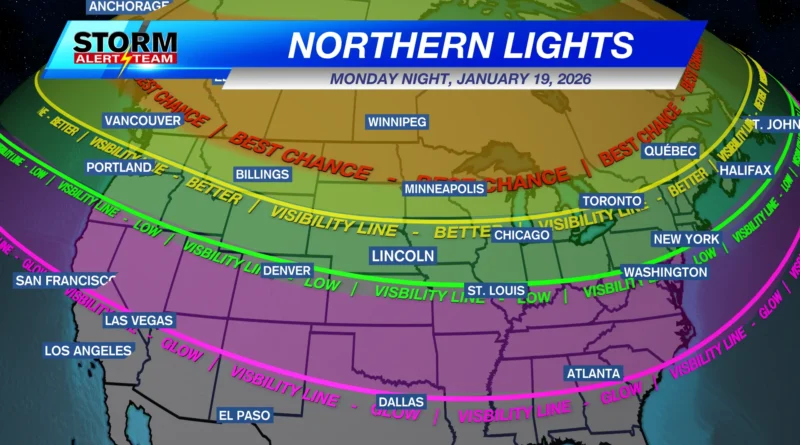
Northern Lights Tonight: Which States Can See Them?
The further north you are, the better your odds. But during strong geomagnetic storms, the lights can surprise people hundreds of miles further south than usual. Here’s a general breakdown by region:
High Probability States (Almost Always Visible During Storms)
- Alaska
- Northern Minnesota (Minneapolis area included during G2+ storms)
- Northern Michigan
- Montana
- Maine
- North Dakota
- Northern Wisconsin (Madison, WI area during active nights)
Moderate Probability (Visible During G2–G3 Storms)
- Northern Idaho and Washington State
- South Dakota
- Northern parts of Iowa, New York, Vermont, and New Hampshire
- Boise, Idaho area
- Missoula, Montana
- Parts of Champaign, Illinois (on very active nights)
Possible but Rare (G4–G5 Extreme Storms Only)
- Northern lights in Colorado tonight — possible during rare severe storms
- Northern lights tonight in Indianapolis — extreme events only
- Northern lights tonight in Dallas — historically rare, but it has happened
- Northern lights tonight in Atlanta — only during the strongest geomagnetic events
- Northern lights tonight in Connecticut — moderate chance during G3+ storms
Pro Tip: Even if you’re in a “moderate” or “rare” zone, check your local weather. Clear skies matter more than location. A dark, cloudless night in Indiana can beat a cloudy night in Montana.
What Time Will the Northern Lights Be Visible Tonight?
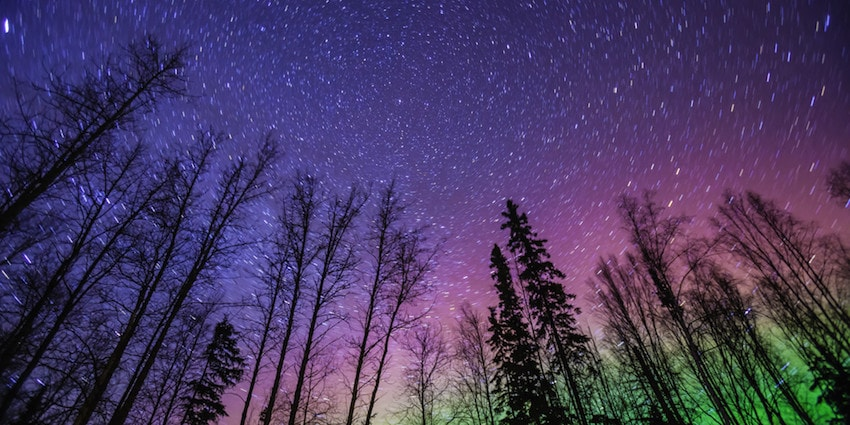
This is the question everyone asks, and the honest answer is: it depends on the storm. But here’s what we know from consistent aurora research and NOAA data:
- Best window: 10:00 PM – 2:00 AM local time
- Peak activity: Often around local midnight (12:00 AM – 1:00 AM)
- Avoid: Right after sunset or in the hour before sunrise — too much ambient light
The aurora doesn’t follow a strict schedule. It pulses, fades, and brightens based on real-time changes in the solar wind hitting Earth’s magnetic field. Your best bet is to go out around 10 PM, stay patient for at least 30–45 minutes, and keep checking. If the Kp index is above 5, you’ve got a real shot.
What Is the Kp Index?
The Kp index is the most important number for aurora hunters. It measures the strength of geomagnetic activity on a scale from 0 to 9. Here’s a simple guide:
- Kp 1–2: Only visible in Alaska and far northern Canada
- Kp 3–4: Northern border states like Minnesota and Montana
- Kp 5–6: Visible across much of the northern US, including the Great Lakes region
- Kp 7–8: Parts of the Midwest and even the Northeast
- Kp 9: Rare extreme event — possibly visible as far south as Florida
You can check tonight’s Kp forecast for free at NOAA’s Space Weather Prediction Center (swpc.noaa.gov). It updates every few minutes.
Link to NOAA Space Weather Prediction Center for live Kp data.
Northern Lights Tonight in Minneapolis, Michigan, and the Midwest
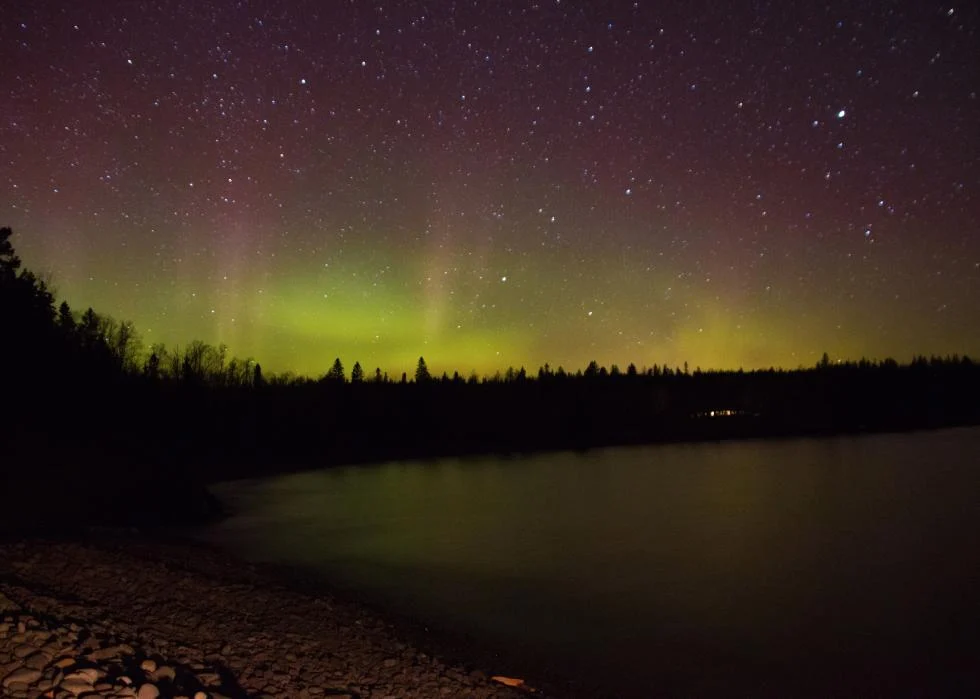
If you’re in the Midwest, you’re in luck — this region offers some of the best accessible aurora viewing in the continental US. Cities like Minneapolis and areas around the Great Lakes sit in a sweet spot: far enough north to catch active displays, but still easy to reach from major urban centers.
Northern Lights Tonight Minneapolis
Minneapolis sits right at the edge of the regular viewing zone. During G2 storms (Kp index of 6 or higher), viewers in the Minneapolis area regularly report seeing aurora. Drive about 60–90 minutes north toward the Boundary Waters Canoe Area Wilderness, and your chances jump dramatically. The area has very little light pollution and wide-open sky views.
Northern Lights Michigan Tonight
Michigan — especially the Upper Peninsula — is one of the best aurora destinations in the US outside of Alaska. Towns like Marquette and Munising sit under naturally dark skies near Lake Superior, making them ideal. Even in Lower Michigan, folks near Traverse City or Sleeping Bear Dunes have had success spotting the lights during moderate storms.
Wisconsin: Madison and Beyond
Madison weather matters here — if skies are clear and the storm is strong enough (Kp 5+), the Madison, Wisconsin area can see a faint glow on the northern horizon. Head north of the city to escape light pollution and find a field or lakeshore with a clear view of the northern sky.
Can You See the Northern Lights in Colorado, Texas, and the South Tonight?
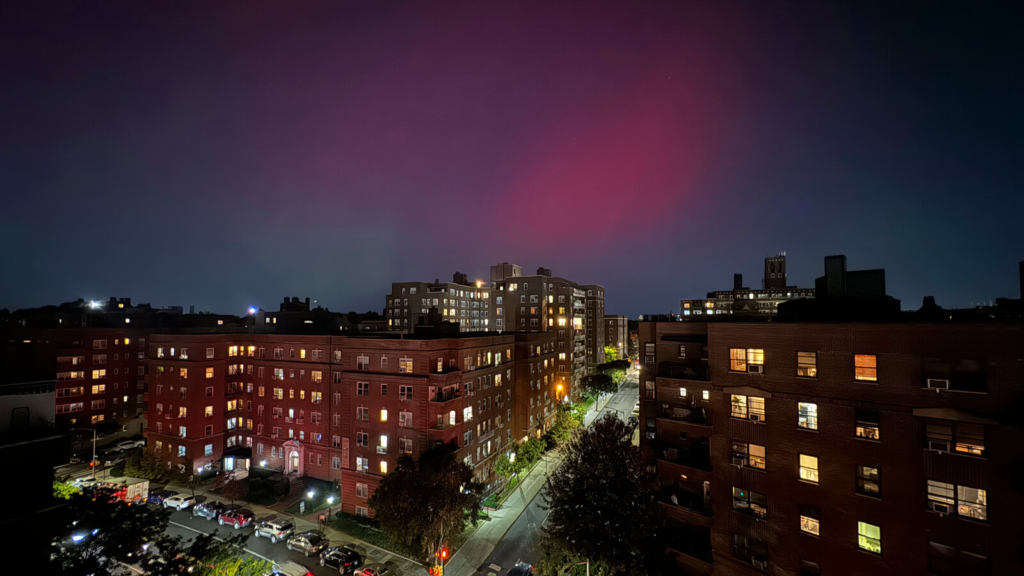
Here’s the honest truth: if you’re in Dallas, Atlanta, Indianapolis, or even Denver asking about the northern lights tonight — you need a big storm. But it’s not impossible.
Northern Lights Colorado Tonight
Colorado’s high altitude actually gives it a slight edge. At elevations above 9,000 feet, there’s less atmosphere between you and the sky. During G3 or stronger storms, observers in rural Colorado — especially the San Luis Valley or the eastern plains far from Denver — have caught faint green and red glows near the northern horizon. The Kp index would need to be at least 7.
Northern Lights Tonight Dallas
Dallas sits at around 32° N latitude. For aurora to be visible here, you’d need a Kp of 8 or 9 — that’s a severe to extreme geomagnetic storm. It’s rare, but January 2026 saw exactly that, with reports coming in from across Texas during a G4 event. If NOAA issues a G4 or G5 alert, find a dark rural area north of the city and look right along the northern horizon.
Northern Lights Tonight Atlanta & Indianapolis
Atlanta (33° N) and Indianapolis (39° N) are both possible during major storm events. Indianapolis is closer to the realistic threshold — G3 events have produced sightings there in recent years. Atlanta requires near-historic storm intensity. Keep your NOAA alerts on and be ready to move fast — extreme storms often give only a few hours of warning.
Northern Lights Tonight Connecticut
Connecticut is farther north (41° N) than many people realize, making it one of the better mid-Atlantic options. During G3–G4 events, the Connecticut shoreline and rural northern areas have reported clear aurora sightings. Getting away from Hartford or New Haven’s city glow is key.
For real-time aurora viewing forecasts by location, recommend SpaceWeatherLive.com.
Where to See the Northern Lights Tonight: Tips for Any Location
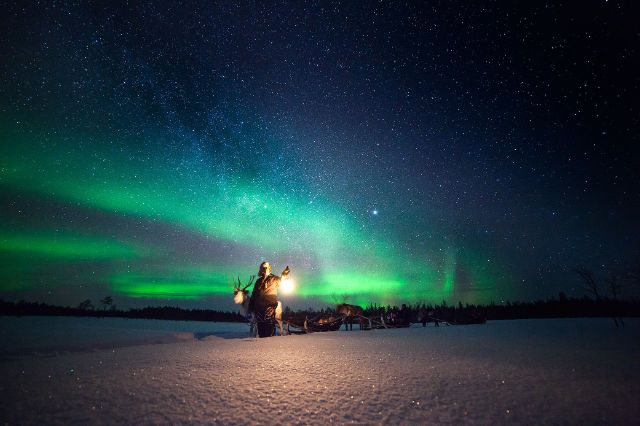
Location is everything. Even if you’re in a prime aurora zone, seeing the lights from inside a city is nearly impossible. Here’s how to give yourself the best shot, no matter where you are.
Find Dark Skies
Light pollution is your biggest enemy. The orange glow of streetlights and buildings can completely wash out a faint aurora. Drive at least 20–30 miles from any major city. Light pollution maps at lightpollutionmap.info can show you exactly where to go.
Face North (Always)
Aurora forms near the magnetic poles, so it always appears on your northern horizon first. Use your phone’s compass app to find true north, then find a spot with an unobstructed view in that direction — no hills, trees, or buildings blocking your sightline.
Let Your Eyes Adjust
Give your eyes at least 20 minutes to adjust to the dark. Avoid looking at your phone screen during this time. Switching your phone to red-light night mode can help preserve your night vision while you check for updates.
Use Your Phone Camera
This is a game-changer many people don’t know about: your phone camera is more sensitive to aurora light than the human eye. Point it north on night mode or a long exposure setting. You’ll often see colors on your screen that your naked eye misses — especially red and purple hues that don’t register well in human vision.
Download a Space Weather App
Apps like SpaceWeather, My Aurora Forecast, or Aurora Now send real-time alerts when the Kp index spikes. Set a notification for Kp 5 or above and you’ll never miss an event again.
How Solar Cycle 25 Is Making Northern Lights More Common in 2026
You might be wondering why northern lights stories seem to pop up in the news every few weeks now. The answer is science, and it’s fascinating.
The sun goes through an 11-year cycle of activity. At the “solar minimum,” it’s quiet — few sunspots, few eruptions. At “solar maximum,” the surface is churning with energy. Solar Cycle 25 reached its maximum around late 2024 and has been ramping up ever since. Scientists confirm that 2025 and 2026 are sitting right at the peak of that activity window.
That means coronal mass ejections — giant bubbles of magnetic plasma flung from the sun — are hitting Earth’s magnetic field more frequently. When they hit, the result is a geomagnetic storm. And geomagnetic storms are what push the aurora down to lower latitudes, making them visible across the US instead of just Alaska or Canada.
In plain terms: 2026 is one of the best years in over a decade to chase the northern lights. If you’ve been putting it off, now is the time to start paying attention.
For deeper reading on Solar Cycle 25, link to NASA Science or the NOAA SWPC solar cycle page.
Conclusion: Don’t Miss the Northern Lights Tonight
The northern lights are one of the few natural wonders you can see completely for free, with no tickets, no equipment, and no travel required — as long as you’re in the right place at the right time with clear skies overhead.
Whether you’re in Minneapolis hoping for a brilliant show or in Dallas holding out for a once-in-a-decade storm, the key steps are the same: check your Kp forecast, find dark skies, face north, and be patient. Your phone camera will often pick up colors your eyes can’t even see.
With Solar Cycle 25 at its peak and geomagnetic storms hitting Earth regularly through 2026, there’s never been a better time to step outside and look up. Set that NOAA alert, bookmark this page, and the next clear night with a high Kp index — get out there.
The sky has something extraordinary planned. You just have to show up.
Frequently Asked Questions About the Northern Lights Tonight
What time will the northern lights be visible tonight?
The best window to see the northern lights is between 10:00 PM and 2:00 AM local time. Activity typically peaks around local midnight. The lights can appear earlier or later, so plan to stay out for at least 45 minutes once you’re in a dark location.
Where can you see the northern lights tonight in the US?
Tonight’s visibility depends on the Kp index. States along the northern border — including Alaska, Minnesota, Michigan, Montana, Wisconsin, and Maine — are most likely to see aurora. During strong storms (Kp 7+), sightings are possible much further south, including Colorado, Indiana, and even Texas or Georgia.
Can I see the northern lights tonight in Minneapolis?
Yes, Minneapolis is in a regular viewing zone. Drive 60–90 minutes north toward darker skies for the best experience. A Kp index of 5 or higher is usually enough for a visible display from the greater Minneapolis area.
How do I know if northern lights are visible in my city tonight?
Check NOAA’s Space Weather Prediction Center (swpc.noaa.gov) for the latest Kp forecast. Apps like “My Aurora Forecast” or “SpaceWeather” send real-time alerts to your phone. A Kp of 5 or above is a good threshold for most northern US locations.
Can I see the northern lights with my phone camera?
Yes — and your phone camera often picks up more color than the naked eye. Use night mode or a manual long-exposure setting, set the camera to face north, and rest it on a steady surface. You may see vivid greens and purples that appear faint or whitish to your eyes.
Why are the northern lights so active in 2026?
The sun is near the peak of Solar Cycle 25, called “solar maximum.” During this phase, the sun produces more solar flares and coronal mass ejections, which cause stronger and more frequent geomagnetic storms on Earth. These storms push the aurora further south than usual, making it visible across a much larger portion of the United States.
What is the best app to track the northern lights tonight?
The top apps for aurora forecasting include “My Aurora Forecast & Alerts,” “SpaceWeather,” and “Aurora Now.” All of them use real-time Kp index data from NOAA. You can set custom alerts for when activity in your area reaches viewing threshold.